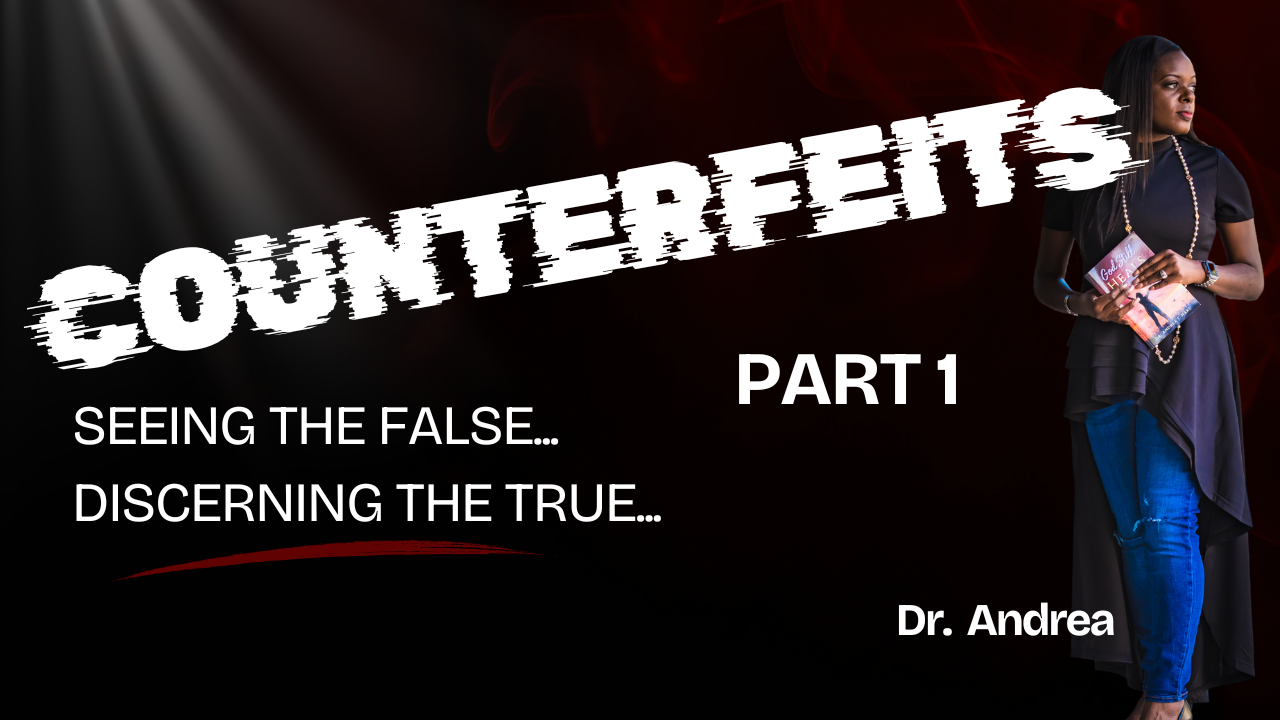
Counterfeits in the Church: How to Discern Real from Fake in the Last Days
If you have ever watched a sermon clip on social media, felt stirred for a moment, and then later sensed something was “off,” you are not crazy—and you are not alone. We are living in a time when deception is rising and spiritual discernment is often at an all-time low in the Body of Christ (2 Timothy 3).
This isn’t to make you fearful; it is a loving wake-up call. Jesus warned that in the last days there would be false teachers, false prophets, and spiritual counterfeits so convincing that, if possible, they could deceive even the elect (Matthew 24:4–5, 11, 24). The good news is that God has not left you defenseless. He has given you His Word, His Spirit, and very clear markers to help you recognize what is real and what is counterfeit.
In this article (Parts 1-3), we are going to talk about how to spot counterfeit ministers and counterfeit spiritual activity, and how to grow in the kind of discernment you need to stand firm until the end (Matthew 24:13).
The Last Days: Why Discernment Matters Now
Scripture describes a specific climate that would mark the “last days,” and we are watching much of it unfold in real time.
Jesus’ words in Matthew 24 paint a sobering picture:
“You will hear of wars and rumors of wars” (Matthew 24:6).
“Nation will rise against nation, and kingdom against kingdom. There will be famines and earthquakes in various places” (Matthew 24:7).
“Many will fall away and betray one another and hate one another” (Matthew 24:10).
“Because lawlessness will be increased, the love of many will grow cold” (Matthew 24:12).
Paul echoes this in 2 Timothy 3:1–5:
“But understand this, that in the last days there will come times of difficulty. For people will be lovers of self, lovers of money, proud, arrogant, abusive…having the appearance of godliness, but denying its power. Avoid such people.”
Luke 21:25–26 adds that there will be “signs in sun and moon and stars,” and that people’s hearts will fail them for fear of what is coming on the earth. Acts 2:17–20 reminds us that in these last days God is also pouring out His Spirit, and there will be visions, dreams, and prophetic activity alongside “blood and fire and vapor of smoke,” and the sun turned to darkness and the moon to blood.
At the very same time, many believers are spiritually malnourished and illiterate. Instead of feasting on the Word of God, we scroll through TikToks and reels hoping for a quick motivational fix. Or even worse, getting all their Bible knowledge from videos. We develop “itching ears,” drawn to messages that affirm what we already want rather than what we need to hear (2 Timothy 4:3–4). We settle into a lukewarm state—having “a form of godliness but denying its power” (2 Timothy 3:5).
Another quiet but serious issue: there is a noticeable decline in praying in the Spirit. Jude 20 tells us, “But you, beloved, building yourselves up in your most holy faith and praying in the Holy Spirit.” Yet many have neglected this spiritual lifeline in exchange for busyness and distraction.
Click Here to Learn About Receiving the
Holy Spirit
Against that backdrop, learning to discern is not optional; it is part of our biblical mandate to watch, be ready, stay awake, and endure to the end (Matthew 24:13, 42; 1 Peter 5:8).
The Rise of Counterfeit Ministry
In that environment of low discernment and high distraction, counterfeit ministry thrives.
Counterfeit ministry doesn’t always look obviously evil. In fact, that’s what makes it dangerous. It often looks polished, professional, and highly “anointed” on the surface. The messages may be motivating. The personality may be magnetic. The production value may be excellent. But underneath, something is missing.
Some of the trends we are seeing include:
Performance culture in church: Services are so structured and controlled that there is little room for the Holy Spirit to truly move (2 Corinthians 3:17). Everything is timed, rehearsed, and measured by crowd reaction instead of obedience to God. This is a spirit of religion.
Performance ministry from leaders: Ministers learn how to act, shout, and “whoop” their way through a message to stir emotions, but there is little true revelation or transformation (1 Corinthians 2:4–5).
Motivational but unanointed preaching: Messages sound like a mix of self-help, pop psychology, and business coaching, with a few Bible verses sprinkled in (Colossians 2:8).
AI-generated and plagiarized sermons: In an age where technology can generate full sermons and people can copy others’ messages with a few clicks, it has become easier to preach without ever really seeking God (Jeremiah 23:30–32).
Celebrity culture in ministry: Some leaders are now treated like entertainers, complete with bodyguards, luxury transport, and fan-style followings—contrary to Jesus’ example of servanthood (Mark 10:42–45).
Influencer pastors: Social media influencers, gifted at marketing but often spiritually immature and unaccountable, are becoming people’s primary pastors and teachers (James 3:1).
At the same time, God is allowing a season of public exposure. Hidden things are being brought to light (Luke 8:17, Luke 12:2). We have watched prominent figures in both the church and the world exposed for affairs, theft, abuse, and other hidden lifestyles. This uncovering is a sign of God’s mercy and judgment, removing the veil so we can see clearly (1 Peter 4:17). Exposure is a form of judgment; however, its biblical goal is repentance, revelation, and restoration. It is always a last resort for God.
How to Recognize Counterfeit Spirits, Ministers, & Influencers
So how do you, as a believer who loves God and wants to stay in truth, recognize what is counterfeit? Scripture gives us several practical keys.
1. Look at the Fruit
Jesus said, “You will recognize them by their fruits” (Matthew 7:16–20). A good tree cannot bear bad fruit, and a bad tree cannot bear good fruit.
The challenge today is that social media only shows “highlight reels,” not real life. But fruit will eventually show, especially in the people closest to a leader.
Ask yourself:
What kind of fruit do I see in their family, staff, and inner circle?
Do the people around them seem healthy, whole, growing, and loved—or fearful, used, and discarded?
Rotten fruit may be carefully hidden, but it cannot be hidden forever (Luke 6:43–45).
2. Listen to the Message
Counterfeits rarely preach obvious lies. Instead, they mix just enough truth with error to make it palatable and hard to detect. Paul warned about those who “preach another Jesus” or bring “a different gospel” (2 Corinthians 11:4; Galatians 1:6–9).
Ask:
Does this message ultimately glorify Jesus, or does it glorify the minister, their brand, or a certain lifestyle (2 John 9; John 7:18)?
Is the focus on the cross, repentance, holiness, and transformation—or mainly on “living your best life,” success, and personal elevation (Luke 9:23–24; 1 Peter 1:15–16)?
If a message consistently centers the person on the platform rather than the Person of Christ, that is a red flag.
3. Examine the Character
Spiritual gifts can be impressive, but character is where the truth lives.
Paul writes that Satan “disguises himself as an angel of light. So it is no surprise if his servants also disguise themselves as servants of righteousness” (2 Corinthians 11:14–15). That means you cannot judge by outward appearance alone (1 Samuel 16:7).
Key character red flags include:
Obvious pride and arrogance (James 4:6).
Patterns of lying, manipulation, and control—works of the flesh and forms of witchcraft (Galatians 5:19–21; 1 Samuel 15:23).
A craving to be seen, celebrated, and praised rather than a genuine desire to serve (Matthew 6:1–5; Matthew 23:5–7).
Reliance on human strategies and stolen words instead of hearing from God (Jeremiah 23:30–32).
A trail of broken relationships—especially in their own family and long-term friendships (1 Timothy 3:2–5).
Unethical handling of money and lack of financial integrity (1 Timothy 6:9–10; Titus 1:7).
Loose, vulgar, or careless speech that contradicts the holiness they preach (Ephesians 4:29; Matthew 12:34–37).
Charisma can be built; character must be formed by the Spirit (Galatians 5:22–23).
4. Notice the Level of Gifting
Being extremely gifted is NOT proof that someone is genuine. In fact, many counterfeits are highly gifted, and that is part of how they deceive.
Romans 11:29 says, “For the gifts and the calling of God are irrevocable.” That means someone can still operate in a spiritual gift even while their character is compromised. Often, they operate from familiar spirits and divination.
We also see in Exodus 7–8 that Pharaoh’s magicians were able to imitate several of the signs Moses performed. Jesus warned that “false christs and false prophets will arise and perform great signs and wonders, so as to lead astray, if possible, even the elect” (Matthew 24:24).
So instead of being impressed by how accurate, dramatic, or powerful a gift seems, ask:
Does this gift point people to Jesus or to the person (John 16:14)?
Is the gift submitted to the authority of Scripture and godly leadership (1 Corinthians 14:32–33)?
5. Look for a Lifestyle of Sin and a Hardened Heart
We all have the capacity to sin and fall short. Genuine leaders still need grace and repentance like anyone else (Romans 3:23). The difference with a counterfeit is a lifestyle of sin without true repentance.
Over time, continued sin without repentance can lead to a “reprobate mind”—a state in which a person no longer responds to God’s conviction (Romans 1:28). They begin to listen only to themselves and surround themselves with people who affirm them rather than correct them (2 Timothy 4:3). They will often operate in a strong spirit of delusion & rebellion. They condone their sin with a false narrative of grace. This is the individual who is comfortable and content to sin because “God knows their heart…” The comfort of sin only lasts for a season. Its end is always death. Maybe not physical death, but death in certain areas of their life. Jesus came that we may have life and life more abundantly (3 John 2).
If a leader openly lives in sin, excuses it, or twists scripture to justify it, that is not a small issue; it is a serious warning sign (Jude 4; 1 John 3:7–9).
6. Watch How They Handle Correction
A major marker of authenticity is how someone responds when confronted with their wrongdoing.
Can they receive correction from mature believers, or do they attack, deflect, or distance themselves (Proverbs 9:8–9; Proverbs 12:1)?
When they have damaged people publicly, do they repent publicly—or do they quietly move on and call it “forgiveness” while leaving a wake of unhealed victims (James 5:16)?
Real servants of God are not perfect, but they are correctable (Proverbs 27:5–6). Counterfeits are not.
The Culture (or Subculture) Counterfeit Leaders Create
Counterfeit ministry never affects just one person. It creates an entirely unhealthy culture (or subculture) around it. At times, the culture is performance-based for the public. However, a subculture exists of what really goes on in the organization.
Common signs of counterfeit culture (or subculture) include:
Lack of accountability: Sin is allowed to run unchecked because it exists “all the way to the top.” Yet Hebrews 13:17 calls leaders to give an account, and true biblical leadership welcomes accountability.
Systematic cover-ups: Instead of bringing truth into the light, leadership works to hide issues, silence questions, and protect reputations (John 3:19–20; Ephesians 5:11–13). An unbiblical doctrine of grace is often used to manipulate those who ask questions.
Religious performance: Leaders out of fellowship with God can no longer hear His voice clearly, so they perform for people and “borrow” anointing and words from those who still walk closely with the Lord (Isaiah 29:13; Matthew 15:8).
If the environment around a ministry is full of fear, secrecy, and control, that is evidence of the spirit operating behind it (2 Corinthians 3:17; Romans 8:15).
Practical Keys to Grow in Discernment
The goal of this message is not to make you paranoid, but to make you prepared. Jesus told us these things ahead of time so we would not be surprised (Matthew 24:25).
Here are some simple biblical ways to grow in discernment:
Let Scripture be your measuring rod for every teaching (Acts 17:11; 2 Timothy 3:16–17).
Stay full of the Holy Spirit and pray in the Spirit regularly (Ephesians 5:18; Jude 20).
Be alert and sober-minded, recognizing that your adversary, the devil, “prowls around like a roaring lion, seeking someone to devour” (1 Peter 5:8).
Surround yourself with a healthy, accountable, Spirit-filled community (Hebrews 10:24–25; Proverbs 27:17).
You do not have to be tossed to and fro by every new trend, teaching, or personality in the Body of Christ (Ephesians 4:14). If you will anchor yourself in Scripture, stay yielded to the Holy Spirit, and courageously evaluate fruit, message, and character, you can walk in discernment—even in a deceptive age.
Continue reading for Part 2 on how to sharpen your discernment.